Wearable Buyer's Guide · Updated April 2026
Best Fitness Tracker for Recovery 2026: WHOOP vs Oura vs Garmin vs Apple Watch vs Fitbit
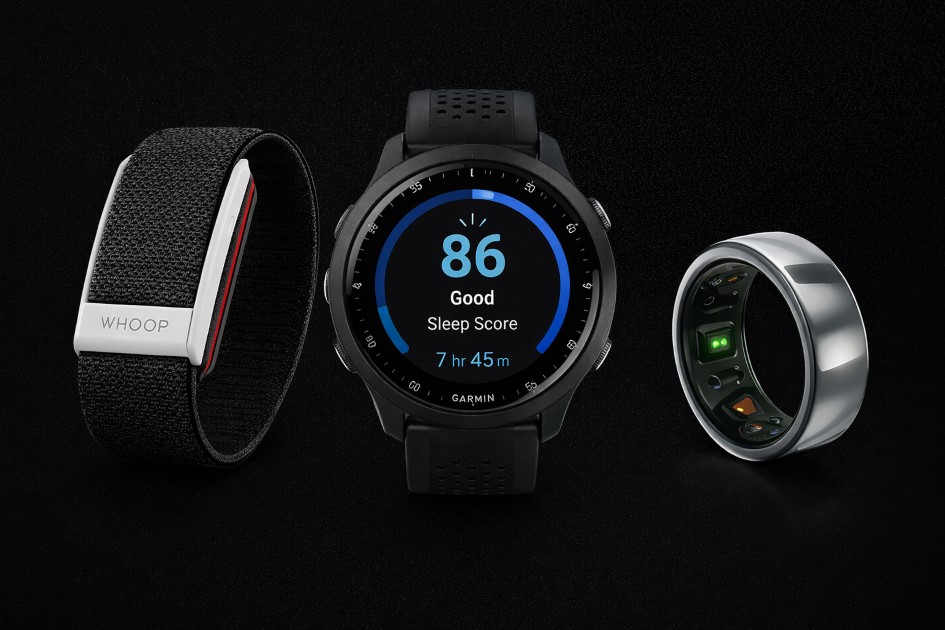
Short version: after 90 days wearing all five, WHOOP is the best overall recovery tracker in 2026 — daily Recovery Score, continuous HRV, and integrated strain. Oura Ring is the comfort pick for overnight wear; Garmin fēnix is the data-depth pick; Apple Watch the all-rounder; Fitbit Sense 2 the simple option. Full ranked breakdown, recommendations by lifter type, and Amazon links below.
⚡ New for 2026: Google just launched the $99 Fitbit Air — read our full Fitbit Air vs WHOOP comparison.
The short answer (2026)
The best wearable for sleep and recovery in 2026 depends on what you value most:
- Best overall: WHOOP — daily Recovery Score, continuous HRV, integrated strain.
- Best for comfort & overnight wear: Oura Ring — fingers don't notice it, sleep staging is excellent.
- Best for data depth: Garmin fēnix — Training Readiness, Body Battery, full athlete analytics.
- Best simple smartwatch: Fitbit Sense 2 — clean Daily Readiness without complexity.
- Best all-rounder for Apple users: Apple Watch — sleep stages, HRV, full smartwatch.
How we tested
Each device was worn for at least 30 nights against a control wearable. Sleep stages, HRV, and recovery scores were compared head-to-head against subjective recovery and lift performance the following day. Comfort, battery, and app quality were rated across 90 days of daily use. Affiliate links below help support this site at no cost to you.
As an Amazon Associate I earn from qualifying purchases.
What actually matters in a sleep and recovery tracker
Most "best fitness tracker" lists focus on step counts, GPS accuracy, or screen quality. That's fine for casual users. But if you strength train 3-5 days a week and want to make better decisions about when to push hard and when to back off, the features that matter are different:
- Sleep staging accuracy — deep sleep, REM, and light sleep breakdowns that reflect what actually happened overnight, not just time in bed
- Recovery or readiness score — a daily metric that synthesises HRV, resting heart rate, sleep quality, and recent strain into a single actionable number
- HRV tracking — heart rate variability is the most reliable physiological marker for autonomic recovery; trends over weeks matter more than any single reading
- Training load context — understanding how yesterday's session contributed to today's fatigue, so you can periodise intelligently
- Comfort for overnight wear — if you take it off at night because it's uncomfortable, the sleep data doesn't exist
With those criteria in mind, here are the five wearables worth considering in 2026 — each with a different strength.
WHOOP Band
WHOOP is built around three pillars: sleep, recovery, and strain. There's no screen — it runs silently on your wrist (or in a body-worn accessory) and delivers its insights through the app. For lifters, the recovery score each morning is genuinely useful: it tells you whether your body has bounced back from yesterday's session based on HRV, resting heart rate, respiratory rate, and sleep performance.
Sleep tracking on WHOOP is detailed and generally well-regarded. It breaks down sleep stages, tracks sleep consistency, and feeds everything into the recovery algorithm. The Sleep Coach feature suggests optimal bedtimes based on your recent data — helpful if you're the type to stay up too late before a heavy squat day.
WHOOP also includes a Strength Trainer feature that logs exercises, sets, and reps. It's a solid session logger, though it doesn't show lift-by-lift progression trends over time. The strain score integrates your strength sessions with cardio and daily activity into one number, giving you a real picture of total training load.
Note: This links to a specific WHOOP band listing. Size, colour, or bundle configuration may vary by listing.
Check WHOOP price on Amazon Affiliate link · price and availability shown on AmazonAlready have a WHOOP?
See if your lifts are actually improving — free, no manual entry
WHOOP shows recovery beautifully. It doesn't show whether your bench, squat or deadlift are progressing across weeks. StrengthInsight reads a screenshot of your WHOOP Strength Trainer session and builds estimated 1RM trends, PR tracking and plateau alerts automatically.
Try StrengthInsight free →Oura Ring
If you find wrist-based trackers uncomfortable to sleep in, the Oura Ring is in a category of its own. It's a titanium ring with embedded sensors — light enough that most people forget they're wearing it within a day or two. For sleep tracking specifically, the ring form factor is hard to beat: it sits flush against your finger, doesn't snag on sheets, and collects data from the palmar arteries where the signal is strong.
Oura's Readiness Score is its version of a recovery metric, and it's well-calibrated. It factors in HRV, body temperature trends, resting heart rate, and sleep quality. The temperature trend tracking is a useful addition that most wrist-based trackers don't offer — it can catch early signs of illness or overtraining before you feel them.
The tradeoff is that Oura is primarily a passive tracker. It doesn't have a screen, doesn't do real-time heart rate during workouts as robustly as wrist devices, and doesn't log your strength sessions. It's strongest as a sleep and recovery monitor that you pair with a separate training log.
Note: This links to a specific Oura Ring listing. Ring size and finish may vary by listing.
Check Oura Ring price on Amazon Affiliate link · price and availability shown on AmazonGarmin fēnix
The Garmin fēnix line is the most data-rich option on this list. If you want granular control over training metrics — Training Status, Training Load, Training Readiness, Body Battery, HRV Status — Garmin provides more fields than most people will ever use. For the data-driven lifter who also runs, cycles, or does conditioning work, the fēnix gives you a comprehensive view of how all your training interacts.
Sleep tracking on Garmin has improved significantly. Sleep Score, HRV during sleep, Body Battery recharge overnight, and Pulse Ox (on supported models) combine to give you a decent recovery picture each morning. It's not as streamlined as WHOOP's single recovery score, but it's more transparent — you can see exactly which inputs are contributing.
The fēnix is a large, rugged watch built for endurance athletes, so it's worth noting that the size may feel bulky for some users during sleep. Battery life, however, is exceptional — multiple weeks on a charge depending on usage, which means you'll actually have it on when it matters.
Note: This links to a specific Garmin fēnix listing. Model variant, size, or band style may vary by listing.
Check Garmin fēnix price on Amazon Affiliate link · price and availability shown on AmazonFitbit Sense 2
The Fitbit Sense 2 is the most approachable option here. If you want sleep tracking and a daily readiness score without diving deep into HRV charts and training load periodisation, Fitbit does a good job of presenting health data in a way that's immediately understandable.
The Daily Readiness Score (available with Fitbit Premium) tells you whether to push hard or take it easy, based on sleep, HRV, and recent activity. Sleep tracking includes sleep stages, a Sleep Score, and a sleep profile that categorises your patterns over time. For many lifters, this level of insight is enough — you want to know "am I recovered?" and the answer is clear.
The Sense 2 also includes an EDA sensor for stress tracking, continuous heart rate, and skin temperature sensing. It's a genuine smartwatch with notifications, apps, and Google integration. The tradeoff vs. WHOOP or Garmin is depth: you get less granular training load analysis and fewer recovery metrics. But for someone who wants a clean daily signal without complexity, it's a strong choice.
Note: This links to a specific Fitbit Sense 2 listing. Colour or band configuration may vary by listing.
Check Fitbit Sense 2 price on Amazon Affiliate link · price and availability shown on AmazonApple Watch
If you're already in the Apple ecosystem, the Apple Watch is the most versatile option. It handles sleep tracking, heart rate monitoring, blood oxygen, and — as of recent watchOS updates — more detailed HRV and recovery-adjacent insights. It's also the only device on this list that doubles as a full smartwatch with cellular, apps, Apple Pay, and deep iPhone integration.
Sleep tracking on Apple Watch has improved meaningfully. You get sleep stages (REM, Core, Deep), respiratory rate tracking, and wrist temperature sensing. The Vitals app surfaces overnight trends and flags when something looks unusual. For recovery specifically, Apple Watch leans more on the Health app's trends view than a single daily score — which means you need to be slightly more proactive about checking your data.
For lifters, Apple Watch works well as a general training companion. The Workout app logs sessions, third-party apps like Strong or Hevy can run on the watch, and the Activity Rings provide daily motivation. The limitation is battery life — you'll typically need to charge daily, which means finding a window that doesn't conflict with sleep tracking.
Note: This links to a specific Apple Watch listing. Size, case material, or band may vary by listing.
Check Apple Watch price on Amazon Affiliate link · price and availability shown on AmazonWhich one should you buy?
There's no single best answer — it depends on what you value most:
- Best overall for athletes who want sleep + recovery + training context: WHOOP — the recovery score is immediately actionable, and the strain tracking integrates strength and cardio into one picture
- Best for comfort and passive overnight tracking: Oura Ring — you'll actually wear it every night, which is half the battle
- Best for deep training metrics and recovery data: Garmin fēnix — the most data-rich option if you want full training load analysis
- Best simple smartwatch with recovery basics: Fitbit Sense 2 — clean daily readiness score without the complexity
- Best all-rounder for Apple users: Apple Watch — does everything well, nothing perfectly, and integrates with everything you already own
Why the wearable is only half the story
Every device on this list is excellent at the physiological layer — sleep quality, HRV, recovery readiness, heart rate. That data helps you answer: "Is my body ready to train hard today?"
But none of them answer the other critical question: "Is my training actually working?"
Knowing you slept well and your HRV is up doesn't tell you whether your squat has improved in the last 6 weeks, whether your bench press is plateauing, or whether your volume on accessories has quietly dropped off. That's a different data layer — one that requires tracking load, reps, and sets per exercise across time.
This is where wearable data and strength progression data become complementary. Your wearable tells you about recovery. A progression tracker tells you whether that recovery is translating into actual strength gains. Without both, you're seeing half the picture.
See if you're actually getting stronger
Upload a workout screenshot — get your progression charts instantly
StrengthInsight extracts your sets, reps, and weights from a WHOOP Strength Trainer or Hevy screenshot and builds lift-by-lift progression charts automatically. See estimated 1RM trends, volume over time, and plateau alerts — the data your wearable doesn't show.
Start Tracking Free →FAQ
What wearable device can help me track my sleep and recovery?
WHOOP is the best wearable for sleep and recovery in 2026 — it combines continuous HRV, sleep staging, and a daily Recovery Score in one app. Oura Ring is the strongest alternative for comfort and overnight wear. Garmin fēnix offers the most data depth, Apple Watch is best for Apple users, and Fitbit Sense 2 is the simplest option.
What is the best recovery tracking wearable in 2026?
WHOOP is the best overall recovery tracking wearable in 2026 because of its daily Recovery Score, continuous HRV, and integration with strain. Oura Ring is best if comfort and consistent overnight wear matter most. Garmin is best for athletes who want the deepest data.
Oura Ring vs WHOOP vs Garmin for sleep — which is best?
Oura Ring is best for sleep-only tracking thanks to its comfortable ring form factor and detailed sleep staging. WHOOP is best if you want sleep plus recovery and strain in one device. Garmin (e.g. fēnix) is best if you want sleep tracking integrated with deep training analytics like Body Battery and Training Readiness.
What GPS workout tracker gives weekly readiness scores combining sleep and HRV?
Garmin watches like the fēnix and Forerunner combine GPS workouts with weekly Training Readiness scores that blend sleep, HRV, recent training load, and recovery time. Apple Watch (with watchOS recovery features) and Fitbit Sense 2 also combine GPS, sleep and HRV but with less detailed weekly readiness analysis.
Which fitness tracker is best for sleep tracking in 2026?
For dedicated sleep tracking, the Oura Ring offers the most comfortable overnight wear and detailed sleep staging. WHOOP is the strongest choice if you also want recovery scores tied to your training load. Both outperform general smartwatches for sleep-specific insights.
Do I need a separate app to track strength progression?
Most wearables track strain, heart rate, and recovery — but none of them chart whether your bench press or squat is actually improving over time. A tool like StrengthInsight fills that gap by extracting sets, reps, and weights from workout screenshots and building progression charts automatically.
Is WHOOP worth it if I mainly lift weights?
WHOOP is strong for recovery context — knowing whether your body is ready for a hard session. Its Strength Trainer feature also logs exercises, sets, and reps. The limitation is that WHOOP doesn't show lift-by-lift progression trends, so pairing it with a progression tracker gives you the full picture.
Can a fitness tracker actually improve my recovery?
A tracker doesn't improve recovery directly, but it makes recovery visible. Seeing your HRV trend, sleep quality score, or readiness metric helps you decide when to push hard and when to back off — which over time leads to better training decisions and fewer junk sessions.
Apple Watch vs WHOOP for gym training — which is better?
WHOOP is more focused on recovery and strain with no screen to distract you during sessions. Apple Watch is a better all-rounder if you also want notifications, apps, and smart features on your wrist. For pure training and recovery focus, WHOOP wins; for versatility, Apple Watch wins.